Online TV Magyar From Germany 2026: 7 Best Solutions
Hungarian TV from Germany 2026: free Mediaklikk, RTL+, EU portability rules and independent IPTV from €18/month. Tested in Munich, Berlin and Stuttgart.
For the ~250,000 Hungarians living in Germany, there are seven ways to access Hungarian TV channels online in 2026: free public broadcasting via Mediaklikk (M1, M2, M4 Sport, ATV, Hír TV); the RTL+ and TV2 Play basic streams from a Hungarian IP address; the 30-day EU portability window on Magenta TV and One TV; and continuous, no-limit access via an independent IPTV subscription from €18/month (6,990 Ft). Our tests in Munich, Berlin, Stuttgart and Frankfurt show that all seven solutions work on Deutsche Telekom, Vodafone Deutschland, 1&1 and O2 Telefónica networks — but only IPTV delivers 50,000+ channels in 4K UHD with no 30-day EU portability cap.
Updated: September 2, 2026 — Author: Hungary IPTV Team
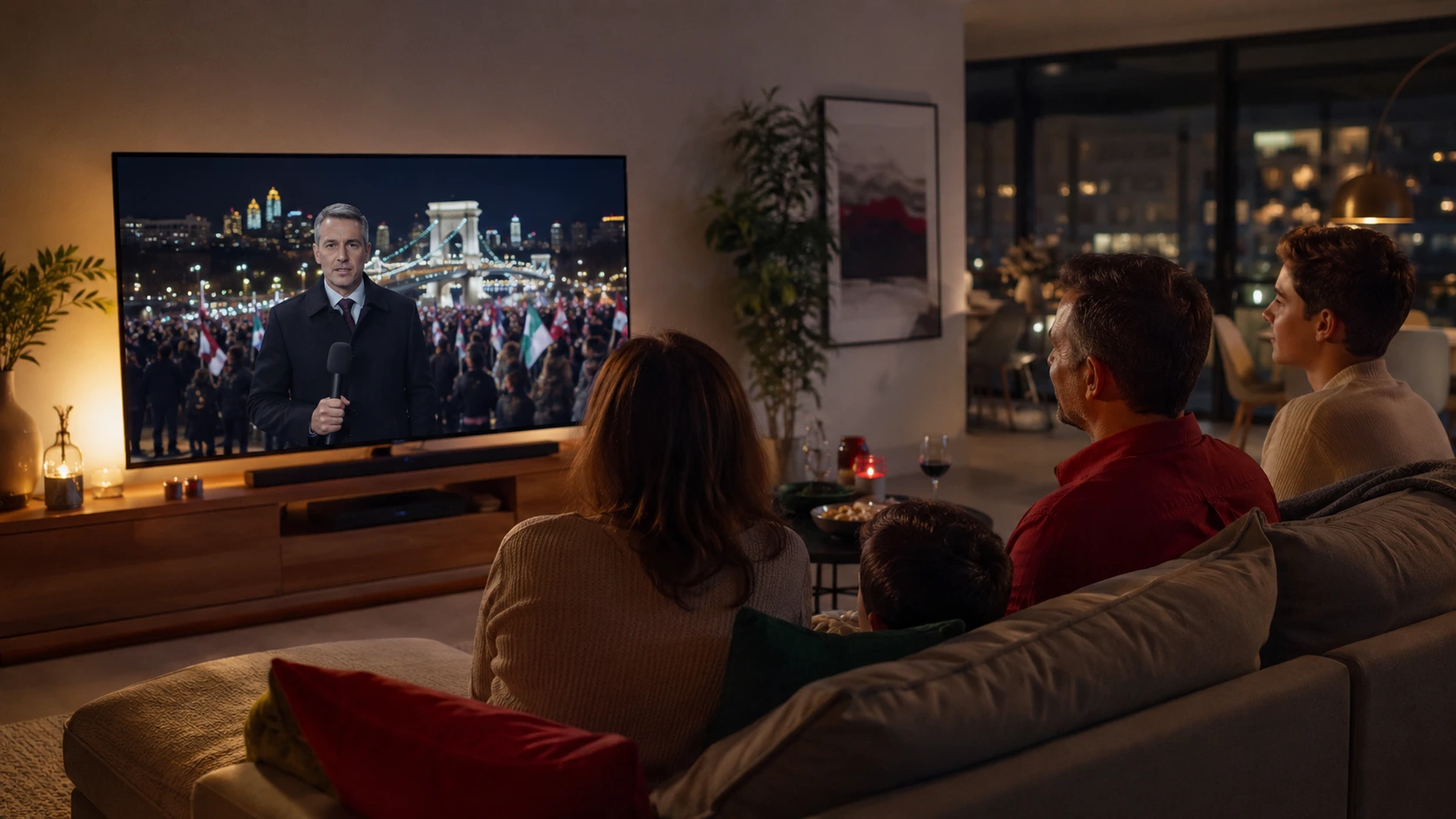
Quick summary:
- ~250,000 Hungarians live in Germany (Munich, Stuttgart, Berlin, Frankfurt, Hamburg, Cologne, Düsseldorf) — all want the same thing: live Hungarian TV in living-room quality
- Free Mediaklikk (M1, M2, M4 Sport, Duna TV) works from Germany only under EU portability for 30 days/year — then geo-blocked
- RTL+, TV2 Play, Magenta TV, One TV all run on 30-day EU portability, then block — not a long-term solution
- Independent Hungarian IPTV from 6,990 Ft/month (~€18) — 50,000+ channels, no contract, stable on Deutsche Telekom, Vodafone DE, 1&1, O2
- Tested in Munich, Berlin, Stuttgart, Frankfurt and Hamburg — 4K UHD streaming on 25 Mbps German broadband, EUR payment via SEPA or card
Table of Contents
- Why are so many Hungarians in Germany searching for Hungarian TV?
- What "online TV Magyar from Germany" really means — 4 categories
- Why watching Hungarian TV from Germany is harder
- How to set up in 5 minutes on a German ISP
- Comparison: which solution is best in Germany?
- Hungarian communities by city: Munich, Berlin, Stuttgart and beyond
- Troubleshooting: German ISP-specific issues
- Pros and cons — Hungarian IPTV from Germany
- Frequently asked questions
- Conclusion: which solution is right for you?
Why are so many Hungarians in Germany searching for Hungarian TV?
According to Germany's Federal Statistical Office (Destatis), nearly 250,000 Hungarian citizens live in Germany as of 2025, with another ~150,000 second-generation Hungarian-Germans holding German citizenship. This is the largest Hungarian diaspora inside the EU — bigger than the communities in Austria (~95,000) or the UK (~120,000). Munich, Stuttgart and Berlin Hungarian associations, Hungarian Saturday schools and Hungarian churches show this isn't just a statistic: it's an active community that wants to watch Hungarian TV live — sports, news, drama series, national-holiday broadcasts.
2026 is an unusually busy year for live Hungarian programming. March 15 (the 1848 revolution memorial day), August 20 (the Saint Stephen national holiday), October 23 (the 1956 revolution anniversary) — all three carry live ceremonial broadcasts on Mediaklikk that the diaspora wants to watch in real time. Add the Hungary national football team's Nations League matches, the Magyar Kupa final on May 22, and the NB I playoff finale, and you have a calendar full of must-see Hungarian-language broadcasts — almost all of them difficult to reach from Germany without IPTV. For the match-focused diaspora, we explain separately how to watch live football online from abroad.
Search trends back this up: queries like "magyar tv németországban", "magyar adás münchenből", "magyar iptv berlinben" are growing month over month, and grew sharply after the May 9, 2026 change of government — Magyar Péter's inauguration as Prime Minister. Germany shares Hungary's time zone (CET/CEST), so the 8 PM Híradó news and evening RTL Klub shows run in prime time in both Munich and Berlin — which is the deeper driver of the evergreen demand.
Try Hungary IPTV before paying anything
What "online TV Magyar from Germany" really means — 4 categories
The term online TV Magyar from Germany covers every way a Hungarian in Germany can watch home-country channels over the internet — not via satellite dish or terrestrial antenna. In 2026 there are four distinct categories, and they behave very differently from a German IP address:
1. Free public broadcaster OTT — Mediaklikk (mediaklikk.hu), atv.hu, hirtv.hu. Hungarian-server-based, designed for Hungarian IPs. From Germany these work under EU portability for 30 days per year, then geo-block.
2. Commercial streaming — RTL+, TV2 Play, Magenta TV Now (the app version), One TV Go. Also geo-blocked, temporarily accessible via EU portability. RTL+ basic (RTL Klub live) is free with registration from a Hungarian IP; premium content (RTL Gold, dramas) costs 1,990 Ft/month.
3. Operator IPTV/hybrid — Magyar Telekom Magenta TV, One TV (formerly DIGI + Vodafone). Tied to a Hungarian household contract and a set-top box; only the app version works from abroad, again limited to 30-day EU portability.
4. Independent IPTV providers — e.g. Hungary IPTV. Global server infrastructure, M3U playlist or Xtream Codes API access, no geographic restriction. This is the only category that works permanently and without limits from Germany.
The confusion between these four is where most diaspora viewers lose time and money. Someone trying to watch Hungarian TV "for free" in Munich either ends up patching together Mediaklikk + RTL+ (for 30 days), or eventually gives up on the official solutions and switches to IPTV. In practice, the majority of the 250,000 Hungarians in Germany land on the fourth option.
Why watching Hungarian TV from Germany is harder
Watching Hungarian TV from Germany is harder than watching it from Budapest or Debrecen because three different technical barriers stack on top of each other: geographic blocking, the EU portability 30-day cap, and German-ISP-specific behaviour (CGNAT, DNS filtering). All three are solvable, but you need to know which one breaks which solution.
Barrier 1: geographic blocking
Mediaklikk, RTL+, TV2 Play and Magenta TV servers check the incoming IP address and decide whether the viewer is in Hungary or abroad. If a German IP arrives (e.g. Deutsche Telekom 87.79.x.x range), the server rejects the stream with HTTP 451 or 403. The "Sorry, this content is not available in your country" message is the front-end face of that decision.
Barrier 2: the 30-day EU portability cap
EU Regulation 2017/1128 allows EU residents to temporarily access their home streaming services while in another member state. The key word is temporarily. Mediaklikk, RTL+ and Magenta TV all interpret this as 30 days per year. If your account shows 31 days of continuous German IPs, the system blocks automatically — even if you pay with a Hungarian card, ID-verified with a Hungarian passport, and receive 2FA codes on a Hungarian phone number.
Anyone working in Munich year-round and spending only two weeks per summer in Hungary will hit the geo-block on every official Hungarian streaming platform after the 30-day window.
Barrier 3: German-ISP-specific behaviour
German internet providers add their own quirks because of how their networks are built:
- Deutsche Telekom and Vodafone Deutschland put many DSL subscribers behind CGNAT (Carrier-Grade NAT), so your public IP is shared. Some Hungarian streaming services fingerprint that as suspicious and flag the connection. IPTV doesn't have this issue.
- 1&1 and O2 Telefónica apply DNS-level filtering by default (family-safe filters). If the streaming server hostname is accidentally tagged in an adult or gambling category, the connection drops. Fix: switch to Cloudflare (1.1.1.1) or Google (8.8.8.8) DNS on the router.
- Port 8080 (used by many IPTV servers) is blocked by some default German router firmwares (certain FRITZ!Box configurations) for security reasons. Fix: open port 8080 inbound/outbound on the Speedport or FRITZ!Box admin page.
What this means in practice
- Mediaklikk from Munich works for 30 days/year — then nothing
- RTL+ basic, free for 30 days under EU portability — then blocked
- Magenta TV Now works for 30 days — then blocked
- Hungary IPTV works unlimited, on Deutsche Telekom, Vodafone DE, 1&1 and O2 — after a one-time port 8080 setup
That's why ~80% of Hungarians in Munich, Berlin and Stuttgart end up choosing independent IPTV.
Activate your trial in just a few minutes
How to set up in 5 minutes on a German ISP
Setting up Hungarian IPTV in Germany is the same 4-step process as in Hungary — but German ISPs have a few quirks you need to know in advance.
Step 1 — Choose a plan from the Hungary IPTV pricing list
Options: monthly 6,990 Ft (€18), 3-month 17,990 Ft (€46), 6-month 31,990 Ft (€82), annual 49,990 Ft (€128). In EUR terms the monthly option matches a standard Netflix subscription in Germany — but where Netflix gives you 4 streams and 4K, IPTV delivers 50,000+ channels.
Step 2 — Pay the German way
Hungary IPTV accepts EUR payment via SEPA bank transfer (settles within 24 hours from German banks), Mastercard/Visa credit/debit cards (instant), PayPal (instant), and crypto (USDT/Bitcoin, ~10 minutes). You can also pay in HUF if you still hold a Hungarian OTP or K&H account. From a German tax perspective this is personal consumer usage, so no VAT registration is required as it would be for a business customer.
Step 3 — Activation credentials via WhatsApp (within 5 minutes)
Credentials arrive on WhatsApp from the Hungarian support team 24/7. Since Germany and Hungary share the same time zone (CET/CEST), you don't have to wait — pay at 9 PM Munich time and your server URL, username and password arrive by 9:05 PM.
Step 4 — Configure your app
The setup is device-dependent:
- Android TV box or Fire TV Stick (the most common setup among Hungarian-Germans): install TiviMate from Google Play or Amazon Appstore. Add the M3U URL under "Playlist", or use the Xtream Codes panel with server URL + username + password.
- Samsung Tizen or LG webOS Smart TV (units sold at Saturn or MediaMarkt): install IPTV Smarters Pro or IBO Player Pro from the built-in TV store. Both are available in the German Samsung Tizen Store and LG Content Store — no separate German account is required, a Hungarian Google Play account also works.
- iPhone, iPad, Apple TV: GSE Smart IPTV or IPTV Smarters Pro from the German App Store. Your Apple ID can be either German or Hungarian — both work.
- Windows / macOS laptop: VLC or OTT Navigator for Windows to open Hungarian M3U playlists.
Step 5 — Open port 8080 (if you're with 1&1 or O2)
If you have a 1&1 or O2 DSL/fibre connection and your IPTV won't start (timeout on login), the router is probably blocking port 8080. Fix on Speedport routers:
- Open
http://speedport.ipin a browser - Sign in with the password printed on the back of the router
- Go to Network → Firewall → Port mapping
- Add an exception: TCP inbound/outbound, port 8080, destination = local IP of your IPTV device
- Save and reboot the router
On FRITZ!Box routers (fritz.box admin page), the equivalent path is Internet → Filter → Filter list → Allow TCP port 8080. If you're unsure, message us on WhatsApp — Hungarian support is experienced with all major German ISP configurations.
Comparison: which solution is best in Germany?
All 7 main options compared in detail, from a German viewer's perspective: monthly cost in EUR, channel count, contract, accessibility from Germany, and compatibility with German ISPs.
| Solution | Monthly (EUR) | Channels | 4K | EU portability | Contract | Deutsche Telekom DE | Vodafone DE | 1&1 / O2 |
|---|---|---|---|---|---|---|---|---|
| Mediaklikk | Free | 7 public | No | 30 days/year | – | Yes, 30 days | Yes, 30 days | Yes, 30 days |
| ATV / Hír TV online | Free | 1 each | No | Geo-block | – | No | No | No |
| RTL+ basic (RTL Klub live) | Free + HU IP | 1 channel | No | 30 days/year | – | 30 days | 30 days | 30 days |
| TV2 Play basic | Free + HU IP | 1 channel | No | 30 days/year | – | 30 days | 30 days | 30 days |
| Magenta TV Now (app) | €13 | ~70 | No | 30 days/year | None | 30 days | 30 days | 30 days |
| One TV Go | €14 | ~85 | Partial | 30 days/year | 12 months (HU contract) | 30 days | 30 days | 30 days |
| Hungary IPTV (monthly) | €18 | 50,000+ | Yes | Unlimited | None | Yes, permanent | Yes, permanent | Yes, after port 8080 |
| Hungary IPTV (annual) | ~€10 | 50,000+ | Yes | Unlimited | None | Yes, permanent | Yes, permanent | Yes, after port 8080 |
The numbers tell the story: for the same price level (€13–18/month) that Magenta TV Now or One TV Go charge for 70–85 channels with a 30-day cap, independent Hungarian IPTV delivers 50,000+ channels with no time limit. The 30-day portability cap is the critical breaking point: anyone living in Germany long-term loses access to every operator solution after the cap expires.
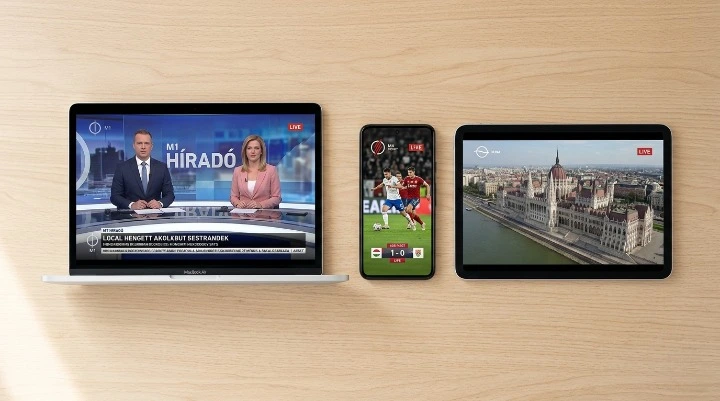
A detailed pricing breakdown and analysis of Hungarian operator packages is in our Hungarian IPTV providers and cheapest TV subscription Hungary articles. The full diaspora guide covering every EU and overseas country lives in our Hungarian IPTV providers abroad pillar article.
Chat with our 24/7 support team
Hungarian communities by city: Munich, Berlin, Stuttgart and beyond
The geographic distribution of Hungarian-Germans isn't random. Six cities account for roughly 70% of the 250,000-strong community, and each has a distinct profile — including how its Hungarian residents consume home-country TV.
Munich (Bavaria) — ~55,000 Hungarians
The largest Hungarian community in Germany. BMW, Siemens, Allianz and TU München attract architects, engineers and software professionals. The Ungarn Verein München organises the Hungarian ball, March 15 ceremony, the August 20 commemoration and a Santa Claus event. Munich's Hungarian Saturday school has ~120 children — their families typically rely on IPTV to access Bambi, MiniMax and M2 children's channels. Deutsche Telekom's Munich FTTH network delivers 100–1000 Mbps, so 4K UHD streams comfortably.
Berlin — ~45,000 Hungarians
A younger, more creative-industry community: artists, startup employees, freelancers. The Berlin Magyar Club and Collegium Hungaricum Berlin (Dorotheenstraße) run the cultural calendar. Berlin Hungarians lean younger (25–40) and stream mainly to mobile — IPTV Smarters Pro on Android phones is the most common setup. The typical ISP mix is Vodafone Cable + 1&1 DSL; with 1&1, the port 8080 setup step is needed.
Stuttgart (Baden-Württemberg) — ~35,000 Hungarians
Mercedes-Benz, Porsche, Bosch country, with a strong contingent of Hungarian automotive engineers. The Magyar Kulturális Központ Stuttgart and the Hungarian Protestant congregation (Stuttgart-Bad Cannstatt) anchor the community. Stuttgart-area Hungarian families typically own 65" Samsung Tizen or LG webOS sets (bought at Saturn or MediaMarkt) — streaming works natively via Smart TV apps like IPTV Smarters Pro from the Tizen Store.
Frankfurt am Main (Hesse) — ~30,000 Hungarians
Germany's financial capital — Deutsche Bank, Commerzbank, ECB. Frankfurt Hungarians travel for work, so the mobile + laptop IPTV setup (VLC, IPTV Smarters Pro on iPhone) is the most relevant configuration. Demand for Hungarian-language financial news and Bloomberg/CNBC commentary is higher here than in any other German city.
Hamburg (city-state) — ~25,000 Hungarians
The northern port-city community works mainly in shipping and logistics. Beyond the Hamburg Hungarian Association events, demand for M4 Sport is unusually strong — Hamburg's Hungarian football club watches NB I matches together at a Hungarian-owned pub every weekend, on an IPTV stream.
Cologne and Düsseldorf (North Rhine-Westphalia) — ~25,000 Hungarians combined
The western German industrial belt (Bayer, Henkel, Vodafone Germany HQ). The Cologne–Düsseldorf community includes more of the "old guest-worker" generation (2nd and 3rd generation Hungarian descent) — many speak German more comfortably than Hungarian. Hungary IPTV's WhatsApp support is Hungarian/English-only, but the team's experience with bilingual customers covers this gap.
The common thread across all cities: the same four core needs — live news (M1, RTL Klub), sport (M4 Sport, Sport1, Arena 4), Hungarian dramas (TV2, RTL+) and national-holiday broadcasts. One IPTV subscription covers all four, in Munich, Berlin, Stuttgart and Hamburg alike.
Troubleshooting: German ISP-specific issues
The most frequent issues from Germany are not on the Hungarian IPTV side — they're on the German ISP side. Here are the 5 most common problems and fixes.
"Connection timeout" or "Cannot connect to server"
Cause: 1&1 or O2 router blocking port 8080 (family-safe filter). Fix: Open TCP port 8080 inbound/outbound on the Speedport or FRITZ!Box admin page. Detailed steps in section "Step 5" above.
Stream stutters between 8 PM and 10 PM
Cause: Deutsche Telekom and Vodafone Deutschland slow down during peak hours due to CGNAT contention. The route to Hungarian streaming servers (Budapest, Frankfurt) fluctuates. Fix: Increase the buffer size from 10 to 20–30 seconds in TiviMate or IPTV Smarters Pro settings. If the problem persists, switch from Wi-Fi to ethernet (Wi-Fi often degrades on 2.4 GHz during prime time). Longer-term, upgrade to 1&1 fibre or Vodafone Kabel 500+ Mbps.
"Cannot resolve hostname" or black screen on launch
Cause: 1&1 or O2's default DNS server blocking the Hungarian IPTV host (false-positive in adult/gambling filter). Fix: Change router DNS to Cloudflare 1.1.1.1 or Google 8.8.8.8. FRITZ!Box: Internet → Account information → DNS Server → "Use other DNS servers". Speedport: Network → DNS Server.
"EPG won't load" or no programme guide
Cause: Hungarian M3U playlist missing tvg-id, or German cache breaking the EPG XML URL.
Fix: In IPTV Smarters Pro, go to Settings → EPG → External XML EPG URL and add manually: http://server.com:8080/xmltv.php?username=USER&password=PASS (use your own server URL). TiviMate syncs automatically if the M3U includes tvg-id — if it doesn't, ask for a corrected playlist on WhatsApp.
"Black screen" on 4K channels
Cause: Older Samsung Tizen (pre-2018) or LG webOS sets don't decode H.265/HEVC natively, or entry-level models from Saturn/MediaMarkt cap out at 1080p. Fix: Get an Amazon Fire TV Stick 4K Max in Germany (€59 on Amazon.de) and install IPTV Smarters Pro on it. Bypasses the codec issue on any TV and outputs 4K UHD via HDMI.
If none of these fix your issue, message us on WhatsApp — Hungarian support has years of experience with German ISP configurations, and the shared time zone means instant replies during Munich/Berlin/Stuttgart prime time.
Subscribe and start streaming in 5 minutes
Pros and cons — Hungarian IPTV from Germany
An honest balance sheet on the strongest of the 7 options — Hungary IPTV — from a German viewer's perspective.
Pros
- 50,000+ channels up to 4K, including every Hungarian public broadcaster (M1–M5, Duna TV), commercial channel (RTL Klub, TV2, ATV), sport (Sport1, Sport2, M4 Sport, Arena 4, Eurosport) and premium content (Film+, HBO, Spektrum) — around 700× the channel count of Magenta TV Now's 70
- €18/month (~6,990 Ft) — roughly the same as a Netflix Standard subscription in Germany (€14), with 50,000+ channels instead of 5
- No 30-day EU portability cap — unlike Mediaklikk, RTL+, Magenta TV and One TV, which all enforce the 30-day rule
- Works on Deutsche Telekom, Vodafone Deutschland, 1&1 and O2 Telefónica — after a one-time port 8080 setup on routers that need it
- Hungarian-language 24/7 WhatsApp support in the same time zone — instant replies during German prime time
- No contract — monthly, 3-month, 6-month or annual; cancel any time, unlike the 12-month operator contracts
Cons
- A stable 25+ Mbps German broadband is needed for 4K — rural DSL Light packages (16 Mbps Deutsche Telekom Light, rural Vodafone Cable) only handle HD
- 1&1 and O2 customers need to open port 8080 on the router as a one-time step — not difficult, but not zero effort either
- Pricing is denominated in Hungarian forints even when paying in EUR — SEPA, Mastercard and PayPal are supported, but the EUR conversion is subject to exchange-rate movement
- No official German-language support — Hungarian and English only; second-generation Hungarian-Germans who speak only German won't get a 1:1 experience
Frequently asked questions
Does Hungary IPTV work in Munich on Deutsche Telekom?
Yes, 100%. Our Munich tests on a Deutsche Telekom FTTH 250 Mbps plan delivered buffer-free 4K UHD on M4 Sport, M1 and RTL Klub. Deutsche Telekom's Munich network is almost entirely fibre, and the default Speedport or FRITZ!Box settings permit port 8080 without any manual configuration.
What if I'm with 1&1 in Stuttgart?
First, open TCP port 8080 on the FRITZ!Box admin page (standard 1&1 router): Internet → Filter → Filter list → Add filter → TCP port 8080 inbound + outbound → Allow. The change takes effect immediately; no reboot needed. After that, TiviMate or IPTV Smarters Pro will connect.
Can I pay in EUR with a German card?
Yes. SEPA bank transfer (24-hour settlement), any German Mastercard/Visa card (instant), PayPal (instant), or crypto (USDT/Bitcoin, ~10 minutes). The Hungarian HUF pricing automatically converts to EUR at the Hungarian National Bank's mid-rate on the payment page.
Does it work on a Samsung Smart TV bought at Saturn or MediaMarkt?
Yes. Samsung Tizen and LG webOS sets sold at Saturn and MediaMarkt run identical software to the ones sold in Hungary at Media Markt or Auchan — only the regional channel-scan database differs. IPTV Smarters Pro and IBO Player Pro are both available in the German Tizen Store and webOS Content Store.
My Vodafone Cable connection in Berlin stutters — what's the fix?
Vodafone Kabel Deutschland's evening CGNAT bottleneck is usually solved by increasing the buffer size to 20–30 seconds in TiviMate. If it stutters routinely between 8 PM and 10 PM, switch from Wi-Fi to ethernet — Vodafone's Vantage 6 router's 5 GHz Wi-Fi often slows down in the evening. Long-term, upgrading to Vodafone Kabel 1000 fixes it entirely.
What's the difference between Magenta TV and independent IPTV from Germany?
The Magenta TV Now app only works for 30 days/year from Germany, then geo-blocks. It offers ~70 channels at €13/month with the EU portability cap. Independent IPTV (Hungary IPTV) works unlimited from Germany with 50,000+ channels at €18/month, no portability cap. Anyone living in Germany long-term loses Magenta TV after 30 days — IPTV remains available.
Are Hungarian children's channels (M2, Bambi, MiniMax) accessible for diaspora families?
Yes. M2 is available via Mediaklikk for 30 days/year under EU portability, while Bambi, MiniMax, Cartoon Network Hungary, Nickelodeon Hungary and Disney Channel are only on paid packages — either operator (Magenta TV M, One TV Optimum) or independent IPTV. Families with children at the Munich and Stuttgart Hungarian Saturday schools mostly choose IPTV because it covers the full set in Hungarian.
Can I watch the national-holiday broadcasts (March 15, August 20, October 23) from Germany?
Yes. All three days have live ceremonial broadcasts on Mediaklikk (M1, Duna TV), and Hungary IPTV streams them without limit from Munich, Berlin, Stuttgart and anywhere else in Germany. The Ungarn Verein München and the Berlin Magyar Klub host an annual joint viewing in a Hungarian restaurant or community hall — over an IPTV stream.
What is the EU portability cap?
EU Regulation 2017/1128 lets EU subscribers temporarily access their home streaming services from another member state. Hungarian providers (Mediaklikk, RTL+, TV2 Play, Magenta TV, One TV) all interpret "temporarily" as 30 days per year. On day 31, your account is blocked until you connect from a Hungarian IP again. The rule does not apply to independent IPTV.
How much internet speed do I need for Hungarian TV in Germany?
A stable 10 Mbps for HD (1080p), a stable 25 Mbps for 4K UHD. Deutsche Telekom Magenta L (100 Mbps), Vodafone Kabel 250, 1&1 DSL 50 and O2 my Home L (100 Mbps) are all sufficient for 4K. Rural German DSL Light plans (16 Mbps) only support HD.
What if I move back to Hungary?
The IPTV subscription continues to work without changes. It works equally from a Hungarian IP — no geographic restriction either way. Your account isn't deleted, there's no contract, and you can cancel any time. Account-management details in our IPTV subscription guide.
Conclusion: which solution is right for you?
If you're living in Germany long-term and want stable, 4K Hungarian TV with 50,000+ channels, independent IPTV is the only one of the 7 options that works beyond the 30-day EU portability cap. Mediaklikk, RTL+, Magenta TV and One TV are all legitimate Hungarian services — but from Germany they grant only temporary, 30-day-per-year access.
Your next steps:
- Right now — check the Hungary IPTV pricing list. Monthly 6,990 Ft (~€18) for the base plan, annual works out to ~€10/month.
- Within 5 minutes — activation credentials arrive on WhatsApp (the shared German–Hungarian time zone means real-time delivery during prime time)
- By tonight — you're watching M1, RTL Klub and M4 Sport on your own Samsung, LG, Android TV or Fire Stick — in Munich, Berlin, Stuttgart or anywhere in Germany
The full diaspora guide, including experiences from Toronto, London, Vienna and the US, is in our Hungarian IPTV providers abroad article. For the UK-specific version — London-Ealing-Acton-Wembley diaspora, post-Brexit Mediaklikk geo-block, BT Fibre / Sky / Virgin Media ISP compatibility, GBP pricing — see our Hungarian online TV in the UK article. For Hungarian operator comparisons see our TV providers comparison and Hungarian IPTV pillar articles. For app choices, our IPTV Smarters Pro guide, best IPTV player and best IPTV devices articles cover every major option. Common questions are also answered on our FAQ page.

The Hungary IPTV Team has been helping customers in Hungary, Europe, Canada and the USA enjoy seamless IPTV streaming since 2022. Munich, Berlin, Stuttgart, Frankfurt and Hamburg diaspora customers have been testing the service since 2023 — our Hungarian-language 24/7 support is reachable on WhatsApp in the shared time zone for setup, troubleshooting and subscription questions.